
Fashion Marketing with Artificial Intelligence: New Strategies for Fashion Brands
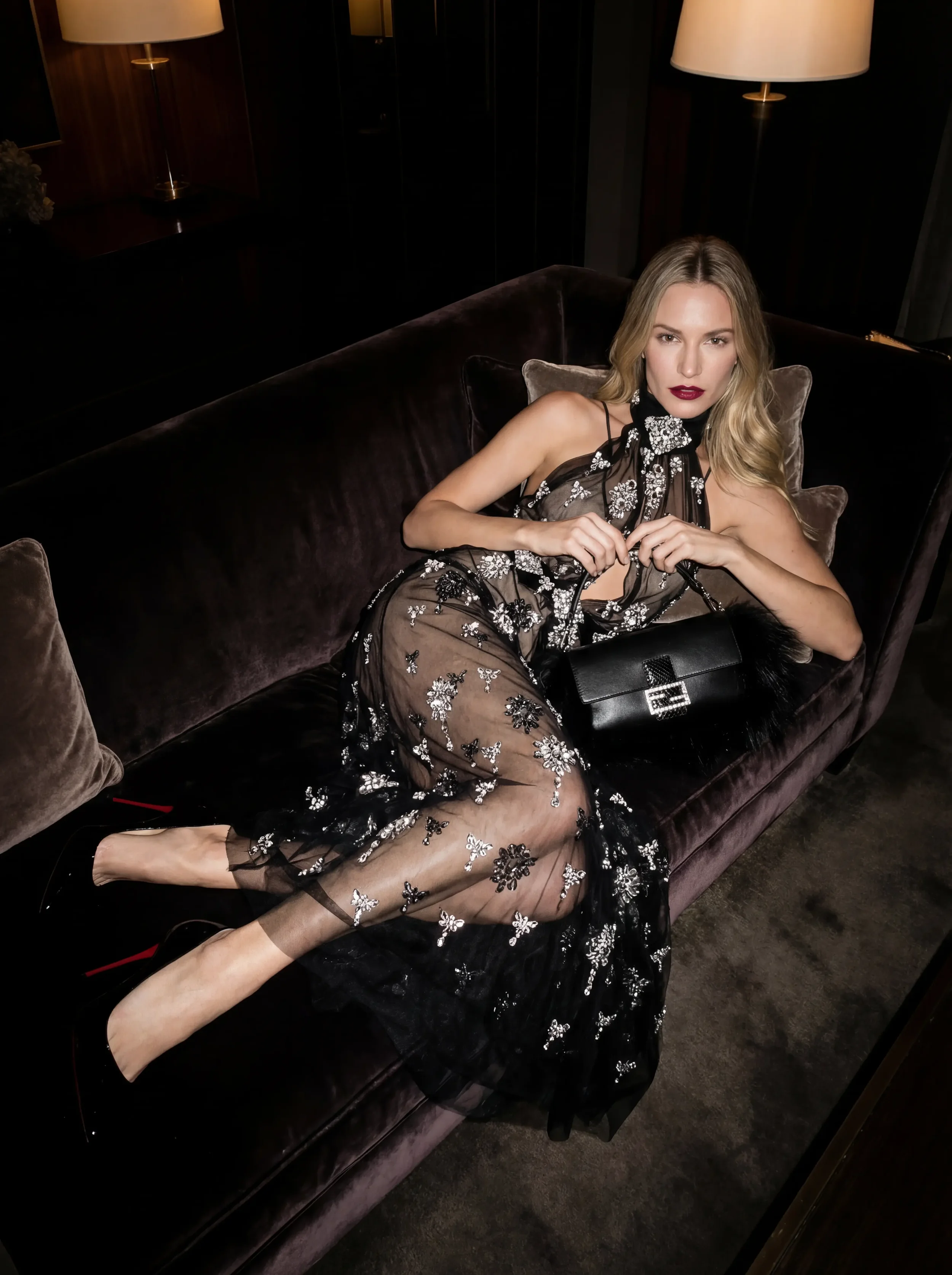
Fashion marketing is changing: AI is the new strategic tool
Marketing in the fashion industry has always been driven by the ability to create iconic images and visual storytelling that capture the public’s attention. From Richard Avedon’s photography to Calvin Klein’s campaigns of the 1980s, right up to today’s digital editorials: whoever masters the visual language dominates the market.
Today, artificial intelligence is bringing about a paradigm shift that goes far beyond simple automation. It’s not just about producing images faster—it’s about completely rethinking the structure of fashion marketing: who produces the content, how it’s distributed, how often, and at what cost.
For fashion brands of all sizes—from major international labels to emerging Florentine designers—this transformation represents a real opportunity to compete at new levels.
Why Visual Content Is at the Heart of Modern Fashion Marketing
In the fashion industry, imagery is the primary means of communication. Industry research estimates that 90% of purchasing decisions in fashion are influenced by visual elements: product photographs, advertising campaigns, social media content, and videos. In this context, the ability to produce high-quality visual content—and to do so consistently—has become a fundamental strategic competency.
The problem is that traditional fashion content production is expensive, slow, and inflexible. A photo shoot requires weeks of planning. A fashion film can cost tens of thousands of euros. And every time the catalog needs to be updated or a version tailored for a new market needs to be produced, the process starts all over again.
Generative AI solves this problem at its root: it reduces production costs by up to 90%, cuts production time from weeks to days, and offers a level of creative flexibility that traditional production cannot match.
The Main Applications of AI in Fashion Marketing
AI Advertising Campaigns
AI-generated campaigns can achieve the aesthetic quality of an international magazine editorial, at a fraction of the cost of traditional production. Settings that are impossible in the physical world, virtual models tailored to the brand, and variations for every format and channel: all of this can now be achieved in a very short time.
For fashion brands that use digital advertising—Meta, Google, Pinterest, programmatic—the ability to produce multiple creative variations for each campaign is a huge competitive advantage. AI makes this possible without proportionally increasing the budget.
Social Media Content Created with AI
Instagram, TikTok, Pinterest, and other visual platforms require a volume of content that traditional production cannot sustain in an economically viable way. A brand active on social media needs fresh images every day, weekly videos, Stories, Reels, and content tailored to different markets.
AI enables the scaling of social media content production while maintaining stylistic consistency and editorial quality. This isn't generic content: each image is developed with a specific artistic direction, in line with the brand's visual identity.
Customization for Markets and Target Audiences
One of the most underrated benefits of AI in fashion marketing is the ability to customize content for different markets, target audiences, and channels without increasing production costs. A brand that sells in Italy, France, Japan, and the U.S. may need to adapt models, settings, and moods to different cultural contexts. With AI-powered production, this process is fast and affordable.
E-commerce and Product Images
Product images are one of the most important investments for any brand that sells online. Images featuring models, in particular, significantly increase the conversion rate compared to photos of products on mannequins. With AI, it’s possible to produce images featuring models for every SKU in the catalog—even for brands with hundreds of products—at an affordable cost.
Visual Storytelling and Brand Identity in the Age of AI
One of the risks of adopting AI in fashion marketing is standardization: if everyone uses the same tools, there’s a risk that all the content will end up looking the same. This is where human artistic direction makes a difference.
AI is an incredibly powerful tool, but it produces excellent results only when guided by a clear creative vision. The quality of the brief, the clarity of the brand identity, and the consistency of stylistic choices: these elements remain irreplaceable human skills that determine the quality of the final result.
AI Fashion Company works with this approach from its digital studio in Florence: AI technology at the service of a rigorous artistic vision, to produce content with a strong and recognizable visual identity—not generic content.
Measuring the Results of AI-Driven Fashion Marketing
Like any marketing tool, AI-generated content must also be measured. The key KPIs to monitor include the cost per piece of content produced (which is significantly lower than that of traditional content production), the volume of content published over time, the engagement rate on social media, the e-commerce conversion rate, and the return on investment for advertising campaigns.
Brands that have integrated AI into their fashion marketing strategy typically report an 80–90% reduction in production costs and an increase in posting frequency, with positive effects on organic visibility and the performance of paid campaigns.
Getting Started: The First Step Toward AI-Driven Fashion Marketing
The best way to get started is to begin with a specific project: a seasonal campaign, a lookbook for the upcoming collection, or content for a new product launch. Setting a concrete goal allows you to tangibly assess the benefits of AI-generated content.
AI Fashion Company offers a free strategic consultation to analyze your brand’s marketing goals and identify the most suitable service. From our atelier in Florence, we oversee every project from strategy to final delivery. Discover our services or contact us to start the conversation.
Leggi anche: AI influencer: la nuova era della comunicazione · Come ridurre i costi di produzione con l’AI · Campagne pubblicitarie moda con AI
Edited by Alicia Sabatino, Creative Director of AI Fashion Company
